Do Lung Detox Supplements Work? What the Evidence and Lung Groups Say
Quick answer
No source we found shows any pill, tea or supplement cleanses the lungs. The American Lung Association calls the lungs self-cleaning and says detox products lack adequate scientific data. Lungora's six ingredients have no human lung study in our sources. Quitting smoking, clean air, exercise and check-ups are what help.
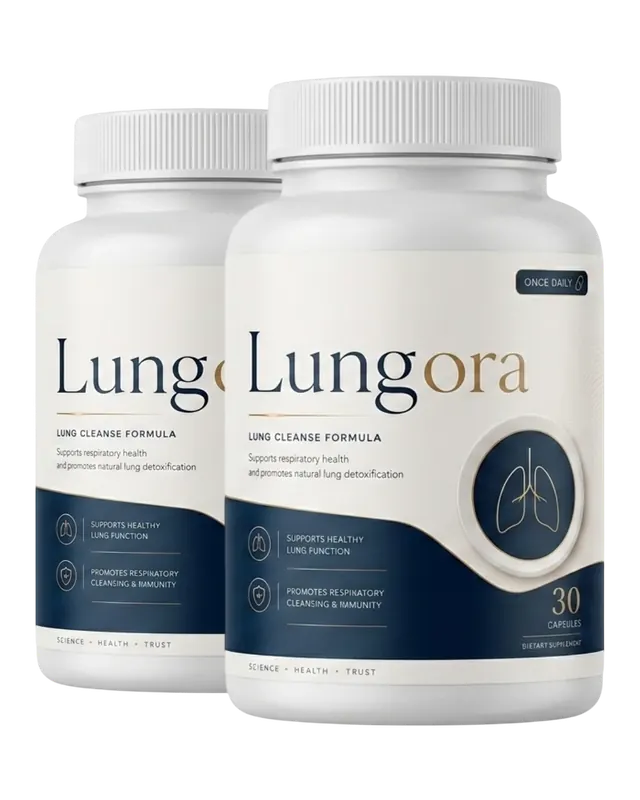
Search for lung detox and you will find pills, teas, drops, oils and salt inhalers, many sold to smokers and to people over 50. We sell one of these products, Lungora, whose bottle reads LUNG CLEANSE FORMULA. That is exactly why we went looking for the evidence before writing a single claim about it.
Here is what lung health groups and NIH say, what the label words mean, and what to do instead.
Do lung detox supplements work?
No source we found shows that any pill, tea or supplement cleanses or detoxes the lungs. The American Lung Association says most detox products are not FDA approved and do not have adequate scientific data to recommend their use (American Lung Association, Can You Detox Your Lungs?).
Others agree. A lung doctor quoted by WebMD says there is no scientific research to support any of them (WebMD, Lung Detox: Can You Cleanse Your Lungs?), and AdventHealth says most of these products are not backed by any research (AdventHealth, The Ins and Outs of Lung Detoxing). NIH’s complementary health center found no compelling research that detox programs remove toxins at all (NCCIH, "Detoxes" and "Cleanses": What You Need To Know).
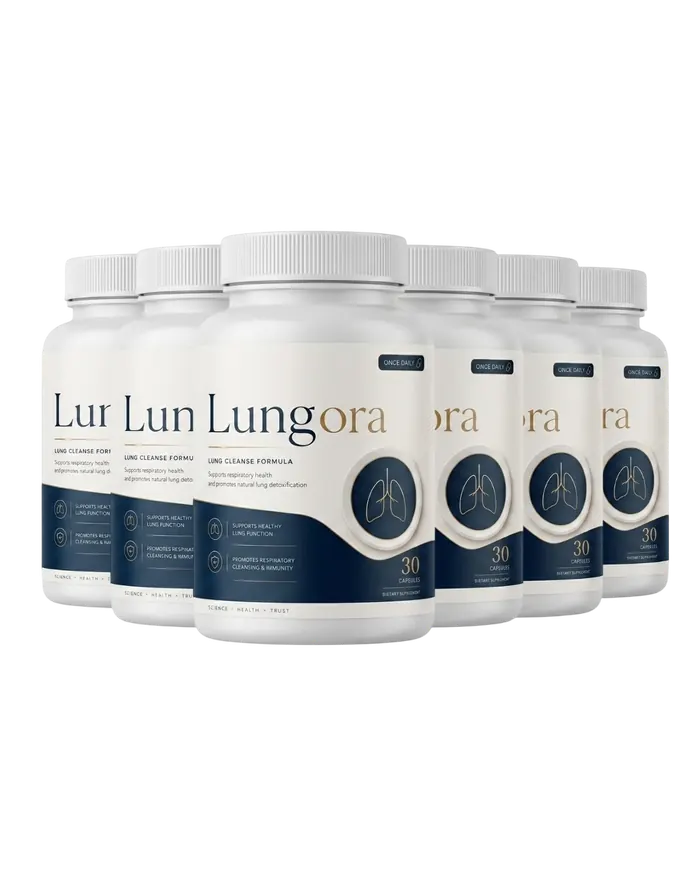
Curious about Lungora? The 6-bottle order gives the lowest price per bottle.
6 bottles at $49 each, $294 total. 60 days to request your money back · Ships free on 3 or 6 · Paid via BuyGoods.
Can you detox your lungs, or do they clean themselves?
They clean themselves. Mucus lining the airways traps dust and germs, and tiny hairs called cilia push it up until you cough it out or swallow it. The American Lung Association describes this as the way you get rid of unwanted matter (American Lung Association, How Lungs Work).
When exposure stops, the lungs start to heal on their own. That is why the same group calls quitting smoking the most effective thing you can do to limit and heal lung damage (American Lung Association, Can You Detox Your Lungs?). Our lung health guide walks through the whole system.
WebMD adds a hard limit: after long-term damage such as decades of smoking, air sacs that are destroyed cannot be replaced (WebMD, Lung Detox: Can You Cleanse Your Lungs?). No product reverses that.
What does cleanse or detox mean on a supplement label?
Legally, very little. Supplements may carry structure/function claims about normal body function. These are not approved by the FDA ahead of time, and the maker is responsible for keeping them truthful (FDA, Structure/Function Claims). A supplement may not claim to treat or prevent a disease.
That is what the asterisk after each front-label line on the bottle is for. It points to the standard line: the FDA has not evaluated these statements. The FDA also has no authority to approve supplements for safety or effectiveness before they are sold (FDA, FDA 101: Dietary Supplements).
Lung claims have crossed the line before. In 2005 the makers of an older product called Lung Support Formula, which had nothing to do with Lungora, settled FTC charges over claims that it helped asthma, emphysema and smoking damage (FTC, Supplement Marketers Settle FTC Charges (Gero Vita, 2005)).
What is inside Lungora, a capsule sold as a lung cleanse?
Six ingredients, and none is a traditional lung ingredient. Only magnesium has an amount on the label (80 mg); the other five share a 575 mg proprietary blend. Tap each name for what it is actually studied for.
Mineral
Magnesium glycinate
The NIH fact sheets we read do not mention lungs or asthma, and neither mentions the glycinate form.
Studied at: 80 mg on the label, 19% of the Daily Value
Antioxidant compound
Alpha lipoic acid
Studied mostly for diabetic nerve pain. Lung findings in our sources are rat studies only.
Studied at: 600 mg a day by mouth in most trials
Root extract
Butcher’s broom
A traditional European remedy for heavy legs and minor vein problems. No source mentions breathing.
Studied at: 150 to 200 mg of extract per dose, for legs (EMA)
Amino acid derivative
L-carnitine
Healthy adults make enough of their own. Results are mixed for every use, and no source covers lungs.
Studied at: 0.5 to 2 g a day
Rhizome extract, 95% curcuminoids
Turmeric extract
NCCIH says there is not enough evidence it helps any health condition. Lung data are animal studies.
Studied at: about 80 mg to 4 g of curcumin a day
Vitamin-like compound
Coenzyme Q10
Heart evidence is inconclusive. Our sources contain nothing on lungs or COPD.
Studied at: 30 to 100 mg a day is typical
The brand’s own sales page groups them as nerve, circulation and antioxidant support and never says detox or cleanse. Details for each sit on our Lungora ingredients page.
Do the Lungora label claims match the evidence?
Not the lung ones. Here is each claim, where it appears, and what we found behind it.
- On the label
LUNG CLEANSE FORMULA
Bottle front, with an asteriskPrinted on the label, but no source we read supports any pill that cleanses the lungs.
- On the label
Promotes natural lung detoxification
Bottle front, with an asteriskThe lungs are self-cleaning. No ingredient here has a human lung study in our sources.
- On the label
Promotes respiratory cleansing & immunity
Bottle front, with an asteriskApart from one passing line on magnesium, none of the six appears in the NIH immune fact sheet we read.
- Marketing only
Supports respiratory wellness and healthy oxygen flow
Brand sales pageNo study, figure or source is given for it.
- Not shown
A study of Lungora itself
NowhereNo trial of this formula has been published.
On immunity, NIH says routine micronutrient pills probably do little to prevent or treat infections in people without a deficiency (NIH ODS, Dietary Supplements for Immune Function and Infectious Diseases).
What are the red flags in lung detox ads?
Promises of a fast cleanup, testimonials in place of studies, and a ticking clock. The FDA lists tip-offs of health fraud, and lung detox ads tend to hit several of them at once.
| Red flag | How it shows up in lung ads | Source |
|---|---|---|
| One product does it all | Clears tar, mucus, smoke and germs in one capsule | (FDA, 6 Tip-offs to Rip-offs: Don't Fall for Health Fraud Scams) |
| Quick fixes | Clean lungs in a set number of weeks | (FDA, 6 Tip-offs to Rip-offs: Don't Fall for Health Fraud Scams) |
| Personal success stories | Smokers who say they breathe easier | (FTC, Health Products Compliance Guidance) |
| All natural | Plant pictures on a capsule that also holds processed compounds | (FDA, 6 Tip-offs to Rip-offs: Don't Fall for Health Fraud Scams) |
| Countdown timers | A clock that makes an offer look time-limited when it is not | (FTC, Report on dark patterns (press release)) |
The FTC says testimonials are never enough to prove a health effect. NIH adds that the FDA and FTC have acted against several detox and cleanse sellers over false claims and hidden ingredients (NCCIH, "Detoxes" and "Cleanses": What You Need To Know).
Are there lung detox side effects or risks?
Yes, mainly from what is inhaled and from drug interactions. The American Lung Association warns that detox products can even be harmful, especially if they are inhaled. That covers oils, steam blends and salt inhalers, which are a different category from a swallowed capsule.
Swallowed products carry their own cautions. In Lungora, three of the six ingredients (turmeric, CoQ10 and L-carnitine) carry a blood thinner caution in our sources, alpha lipoic acid may lower blood sugar, and turmeric extracts are a documented cause of liver injury (LiverTox (NIDDK), Turmeric). See Lungora side effects before you start.
What actually helps your lungs instead of a detox?
The free things. Lung health groups name the same short list, and every item has more support than any pill.
- Stop smoking or vaping. Call 1-800-QUIT-NOW for free coaching.
- Keep smoke out of your home and check the Air Quality Index before outdoor exercise.
- Stay active every week.
- Get regular check-ups and ask which vaccines are recommended for you.
- See a clinician for a cough of 8 weeks or more, coughing blood, or breathlessness with little effort.
Sources: (American Lung Association, Protecting Your Lungs) (CDC Tips From Former Smokers, How to Quit Smoking) (American Lung Association, Warning Signs of Lung Disease). Smokers will find the quitting timeline in our post on lung cleanse for smokers.
Questions about lung detox supplements
Is there any proof behind lung cleanse capsules or tablets?
None that we found. The American Lung Association says detox products lack adequate scientific data to recommend their use.
Would a lung doctor ever prescribe a lung detox?
Not according to our sources. A pulmonologist quoted by WebMD says no scientific research supports any lung detox product.
How many weeks does a lung detox pill take to work?
No study gives any timeline, because none shows these pills work. Week-by-week schedules in some ads are not backed by research.
Are lung detox teas or inhalers safer than pills?
Not necessarily. None has good evidence, and the American Lung Association warns inhaled detox products can be harmful.
What is the best lung detox supplement?
We could not find one with evidence behind it. The changes that do help are quitting smoking, cleaner air, exercise and check-ups.
Does Lungora detox your lungs?
No evidence shows it does. The label says lung cleanse, but none of the six ingredients has a human lung study in our sources.
Why can a bottle say lung cleanse without proof?
Structure/function claims are not approved by the FDA before sale. The asterisk sends you to the line saying the FDA has not evaluated them.
Page check
Written by
Reads every line of the bottle label and checks each health statement against NIH, CDC, FDA and American Lung Association pages.
- Label check date: October 13, 2026
- Built from the printed bottle label, the brand order and policy pages, and the health sources cited in the text
- See something wrong? Tell us at [email protected], and read how this site checks claims