Magnesium Glycinate in Lungora: 80 mg and What It Can Do for Breathing
Quick answer
Each Lungora capsule lists 80 mg of magnesium from magnesium glycinate, 19% of the Daily Value and far under the 350 mg daily limit for supplement magnesium. We found no source showing oral magnesium helps the lungs, asthma or breathing. People with kidney disease, or on antibiotics or bone drugs, should ask first.
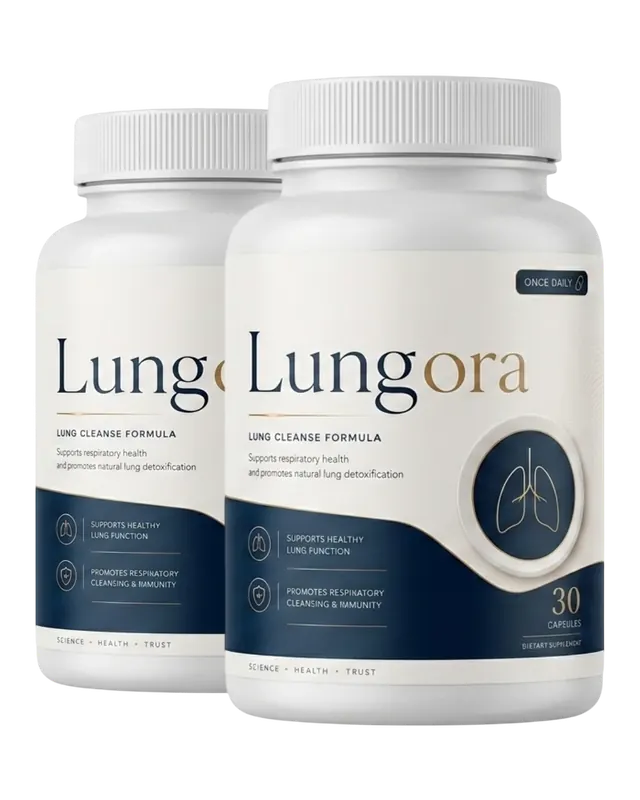
Is magnesium good for the lungs or for breathing?
Not on any evidence we could find for a daily capsule. Neither NIH magnesium fact sheet we read mentions the lungs, asthma or COPD (NIH ODS, Magnesium (consumer)), and no source we opened tests oral magnesium for lung function.
The nearest link is about immunity, and it is thin. An NIH fact sheet notes that low magnesium status goes with weaker immune cell activity, then adds that routine micronutrient pills probably do little against infections in people without a deficiency (NIH ODS, Dietary Supplements for Immune Function and Infectious Diseases).
You may also see searches about magnesium given by drip in hospitals. None of our sources covers that use, so we make no claim about it, and it is not what a swallowed capsule is. Our magnesium for breathing article looks at the question in more depth.
How much magnesium is in one Lungora capsule?
Eighty milligrams, the only ingredient amount on the whole label. That is 19% of the 420 mg Daily Value and well below the 350 mg a day that adults should not exceed from supplements and medicines (NIH ODS, Magnesium (health professional)).
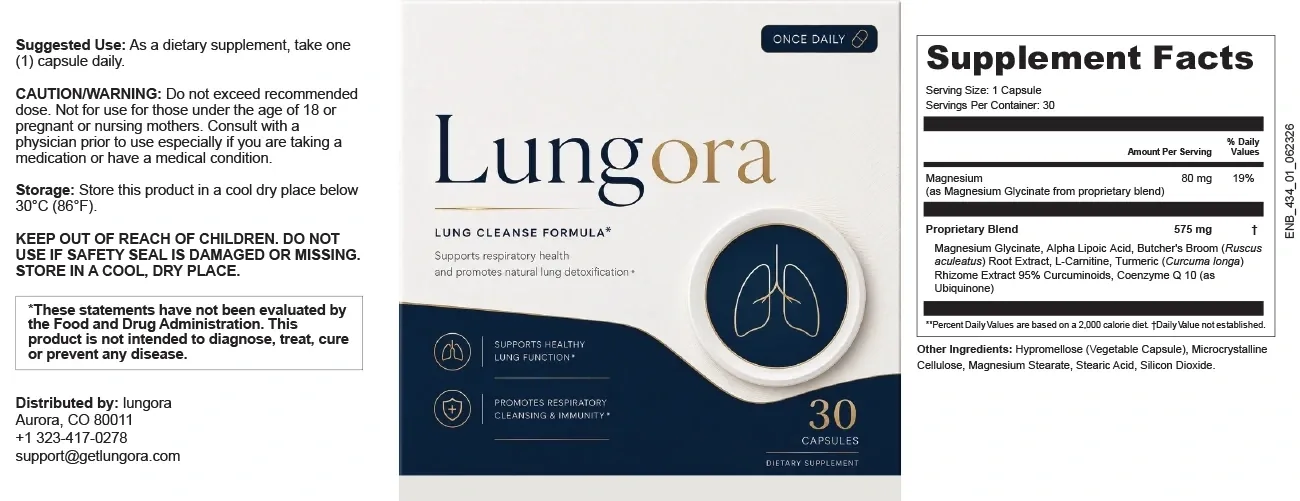
Those two mentions describe the same thing. The 80 mg is the magnesium carried by the glycinate in the blend, so it is part of the 575 mg, not extra. The glycinate compound itself weighs more than 80 mg, and no source we opened says how much more, so we do not estimate it.
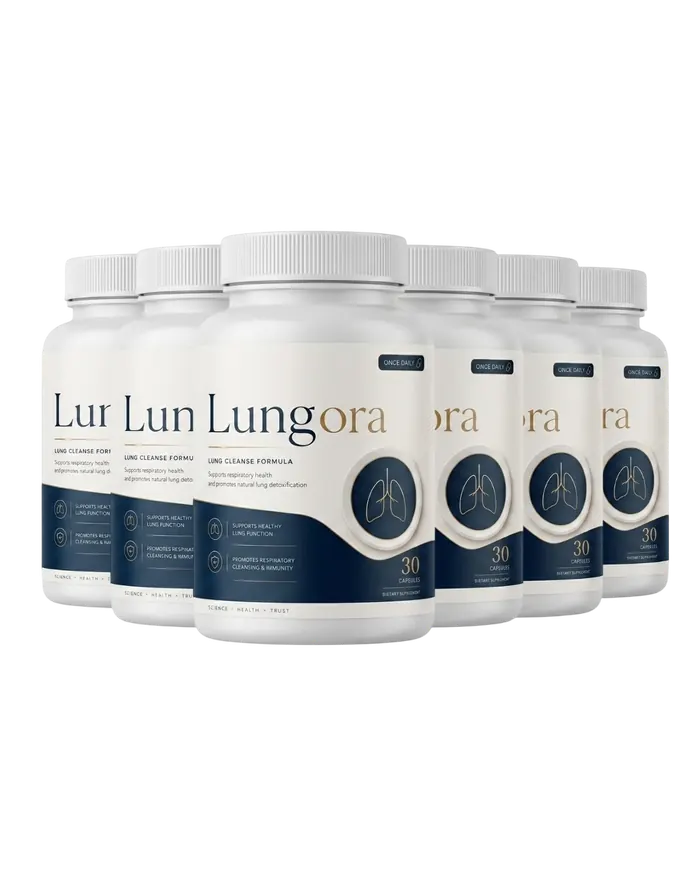
Curious about Lungora? The 6-bottle order gives the lowest price per bottle.
6 bottles at $49 each, $294 total. 60 days to request your money back · Ships free on 3 or 6 · Paid via BuyGoods.
Is magnesium glycinate a better form than other magnesium?
Our sources do not say. The NIH pages compare several forms, but glycinate is not one of them (NIH ODS, Magnesium (consumer)), so any ranking of glycinate would have to come from somewhere we have not checked.
| Question | What the label or our sources show |
|---|---|
| Which form does the label name? | Magnesium glycinate, inside the proprietary blend |
| How much magnesium per capsule? | 80 mg (19% DV) |
| What does the glycinate compound weigh? | Not printed; more than 80 mg |
| Forms NIH calls better absorbed than oxide | Aspartate, citrate, lactate and chloride (NIH ODS, Magnesium (health professional)) |
| Is glycinate in that comparison? | No |
| Form most often tied to loose stools | Oxide, per NIH; glycinate is not discussed |
| Any lung or asthma data on glycinate? | None in our sources |
Form changes how much magnesium is absorbed. It does not turn magnesium into a lung ingredient, and the 350 mg ceiling counts magnesium from every supplement form alike.
How much magnesium can you take in a day alongside Lungora?
Keep the total from capsules, tablets and medicines at 350 mg or less, unless your provider says otherwise. Magnesium in food does not count toward that cap (NIH ODS, Magnesium (consumer)). Add it up like this.
- 80 mg
One Lungora capsule
The label serving. One a day is the full dose.
- + ?
Antacids and laxatives
Some contain magnesium. Read the Drug Facts box and add the milligrams.
- + ?
Other supplements
Multivitamins, sleep blends and standalone magnesium all count.
- 350 mg
The daily ceiling
Stay at or under it from pills and medicines combined.
Go over it and the usual result is diarrhea, sometimes with nausea and cramps. Extremely high intakes can disturb the heartbeat (NIH ODS, Magnesium (consumer)).
Who should ask a clinician before taking magnesium glycinate?
Three groups of people, plus anyone whose breathing has changed. Each has a specific reason.
- Kidney disease. NIH says the risk of magnesium toxicity rises when the kidneys work poorly or fail (NIH ODS, Magnesium (health professional)). Ask before adding any magnesium.
- Antibiotics or bone drugs. Take tetracycline or quinolone antibiotics, such as doxycycline or ciprofloxacin, at least 2 hours before or 4 to 6 hours after a magnesium product. Keep oral bisphosphonates at least 2 hours apart from it (NIH ODS, Magnesium (health professional)).
- Antacid or laxative users. Count their magnesium toward the 350 mg cap, as shown above.
- New breathing symptoms. A cough lasting 8 weeks or longer, breathlessness with little effort, coughing up blood or chest pain for a month calls for a clinician, not a supplement (American Lung Association, Warning Signs of Lung Disease).
Magnesium check
Do you have kidney disease or reduced kidney function?
Are you taking an antibiotic or a bisphosphonate bone drug?
Do you also use a magnesium antacid, laxative or supplement?
Has your breathing or cough changed in the last few weeks?
Answer every question to see your result. Nothing is saved or sent.
Nothing flagged. One Lungora capsule adds 80 mg of magnesium; keep the label dose.
Ask your pharmacist or doctor first, with the label in hand. Spacing doses or counting totals may be all you need.
See a clinician about your breathing before starting any supplement. A capsule cannot explain or treat a new symptom.
Why is magnesium glycinate in a lung cleanse formula?
The brand never says it is for the lungs. The Lungora sales page pairs magnesium glycinate with alpha lipoic acid under a heading about nerves, while the bottle front promises lung cleansing.
- Marketing only
Nerve Health Support
Sales page heading for magnesium glycinateThe page ties the pair to "healthy nerve signaling". It does not mention breathing.
- On the label
Lung cleanse formula
Bottle frontNo source we opened supports magnesium, or any pill, for cleansing the lungs.
- On the label
A magnesium amount
Supplement Facts panel80 mg, 19% DV. The only checkable number on the label.
Its blend partner is covered on the alpha lipoic acid page, and all six are compared on the Lungora ingredients page. For timing, see how to take Lungora; for every reported reaction, see the side effects page.
Magnesium glycinate and breathing: your questions
Is magnesium good for the lungs?
No source we opened shows that oral magnesium improves lung health. The NIH fact sheets on magnesium do not mention the lungs, asthma or COPD.
Is magnesium glycinate good for asthma?
We found no evidence for it. Asthma has no cure and is managed with treatment and an asthma action plan, so keep using what your clinician prescribed.
How much magnesium is in a Lungora capsule?
80 mg, which is 19% of the Daily Value. It comes from the magnesium glycinate inside the 575 mg blend.
Can I take Lungora with another magnesium supplement or an antacid?
Only if the total from all pills and medicines stays at 350 mg a day or less. One capsule uses 80 mg of that.
Is magnesium glycinate safe with kidney disease?
Ask your kidney doctor first. Poor kidney function raises the risk of magnesium building up to toxic levels.
Should I take magnesium glycinate in the morning or at night?
The Lungora label sets no time of day, only one capsule daily. Pick a time you will remember and space it from antibiotics or bone drugs.
Is magnesium glycinate the best form of magnesium?
Our sources do not rank it. The NIH comparison of forms leaves glycinate out entirely.
Can the magnesium in Lungora cause diarrhea?
NIH links diarrhea to high magnesium doses from pills or medicines. One capsule is 80 mg, well under the 350 mg limit, but stacking other magnesium products pushes the total up.
Page check
Written by
Reads every line of the bottle label and checks each health statement against NIH, CDC, FDA and American Lung Association pages.
- Label check date: October 13, 2026
- Built from the printed bottle label, the brand order and policy pages, and the health sources cited in the text
- See something wrong? Tell us at [email protected], and read how this site checks claims