Turmeric Extract in Lungora: Strong on Paper, Weak on Lung Evidence
Quick answer
Lungora contains turmeric rhizome extract standardized to 95% curcuminoids, far stronger than the 2% to 9% in the spice, but the amount is hidden in a 575 mg blend. Curcumin absorbs poorly, NCCIH finds too little evidence for any condition, lung findings are animal-only, and LiverTox lists turmeric as a proven cause of liver injury.
Is turmeric good for the lungs?
Not on human evidence. The Linus Pauling Institute says the curcumin lung findings are animal or early cancer studies, and no source we opened reports a trial of turmeric for breathing or lung health in people.
NCCIH goes further. Its overall verdict is that research does not yet show turmeric or curcumin helps any health condition, although it calls early knee arthritis results promising (NCCIH, Turmeric: Usefulness and Safety).
Animal data has a known limit. The Federal Trade Commission says health claims need human trials and that animal or lab studies alone are not enough (FTC, Health Products Compliance Guidance). The brand's sales page, for its part, describes turmeric and CoQ10 only as antioxidants and never ties them to the lungs.
Root powder or 95% extract: which one is in the capsule?
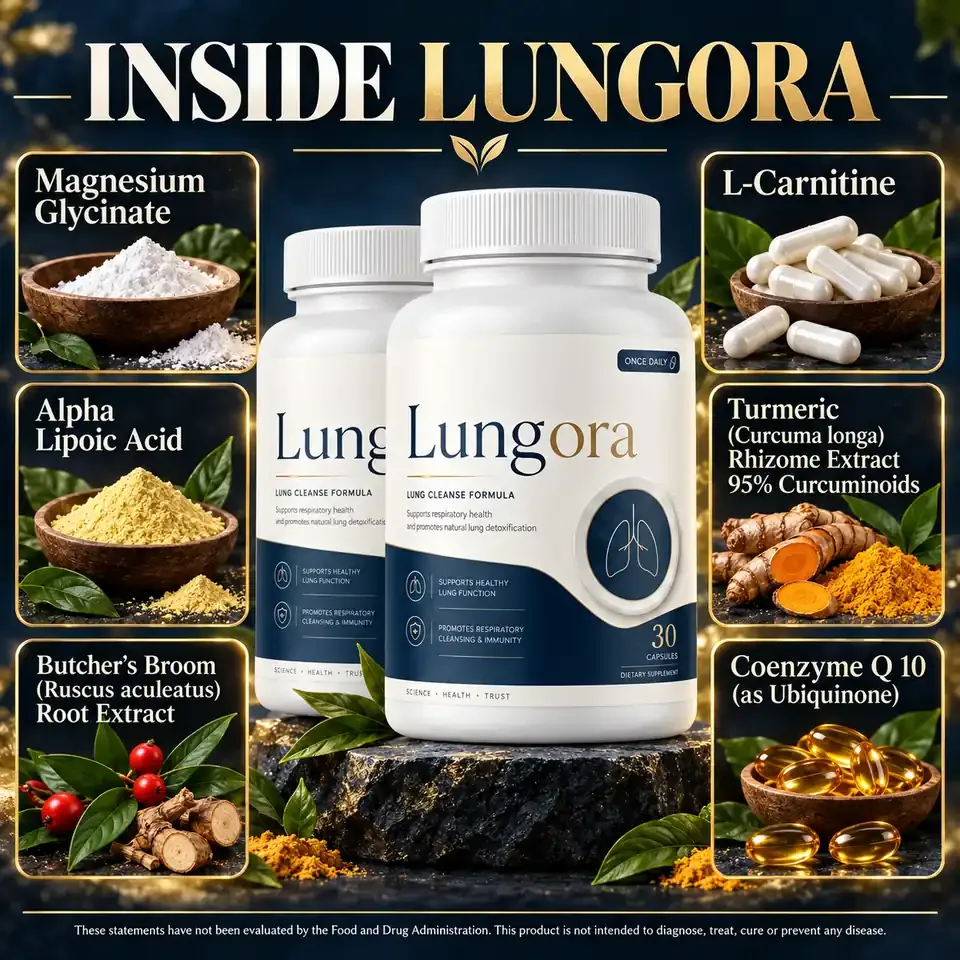
Lungora uses an extract, not kitchen turmeric. The label reads "Turmeric (Curcuma longa) Rhizome Extract 95% Curcuminoids", a concentrated form, while the spice itself holds only about 2% to 9% curcuminoids.
Ground root and tea
About 2% to 9% curcuminoids. LiverTox still records liver injury with plain ground turmeric and turmeric tea, though fewer cases.
95% curcuminoid extract
The form on the Lungora label. The 95% figure is the maker's claim, and FDA does not strictly regulate it.
Boosted absorption products
Extracts with piperine or nanoparticles. Many reported liver cases involved them. None is listed on the Lungora label.
A word on "standardized". NCCIH warns that the term does not guarantee quality, and that supplements can contain ingredients that are not on the label (NCCIH, Using Dietary Supplements Wisely). No lab report for any Lungora lot is public.
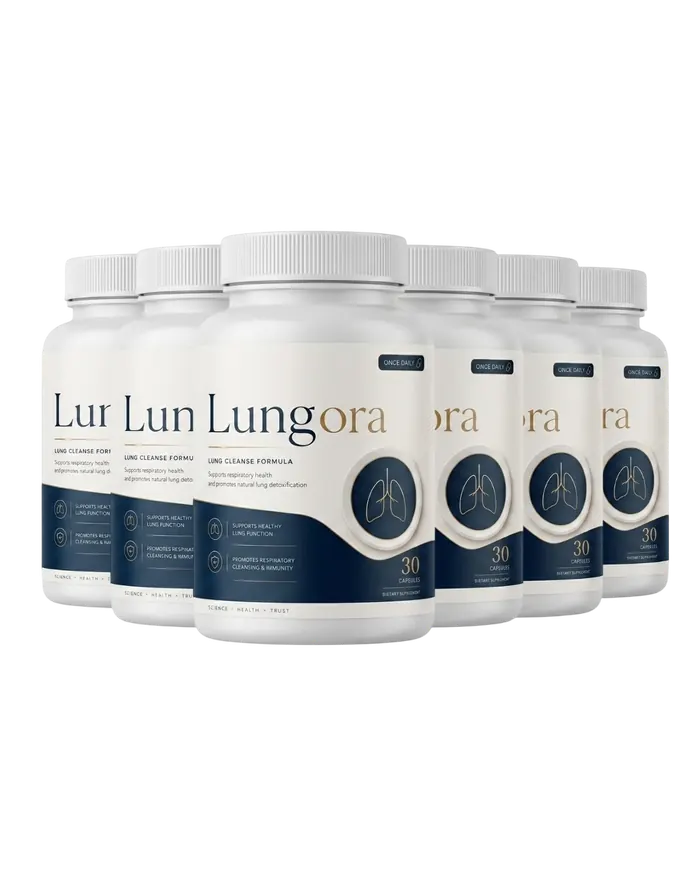
Curious about Lungora? The 6-bottle order gives the lowest price per bottle.
6 bottles at $49 each, $294 total. 60 days to request your money back · Ships free on 3 or 6 · Paid via BuyGoods.
Is curcumin absorbed well enough to do anything?
Poorly, according to the research reviews. Curcumin is "poorly absorbed" and "rapidly metabolized", and the Linus Pauling Institute questions whether doses under 3.6 g a day act in the body at all (Linus Pauling Institute, Curcumin).
| What was studied | Curcumin per day | Next to the 575 mg blend |
|---|---|---|
| Thinking and memory | About 80 mg | Could fit, if most of the blend were turmeric |
| Prediabetes | 0.5 g | Nearly the whole blend |
| Type 2 diabetes | 0.6 to 1.5 g | More than the blend |
| Inflammation markers | 1.2 g | About twice the blend |
| Ulcerative colitis | 2 to 3 g | Several times the blend |
| Alzheimer's disease | Up to 4 g | About seven times the blend |
| Some cancer trials | 6 to 8 g | More than ten times the blend |
| Lungora capsule | Not published | One share of 575 mg |
LiverTox adds that recommended daily doses on turmeric products vary from 100 mg to over 1,000 mg. The extract in one Lungora capsule sits at the low end of that span or below it, and the exact figure is hidden in the blend.
Can turmeric extract hurt the liver?
It can. LiverTox gives turmeric its highest likelihood grade, A, which means liver injury from it is well proven in real patients (LiverTox (NIDDK), Turmeric).
Many cases involved products built for high absorption, including an outbreak in Italy, but injury also followed plain spice and tea. Symptoms usually began 1 to 4 months in, with a reported range of a few weeks to 8 months. A gene marker, HLA-B*35:01, was strongly linked, and one probable case was fatal.
Memorial Sloan Kettering adds autoimmune hepatitis to the reported problems, and NCCIH warns that highly bioavailable curcumin may harm the liver. A 95% extract is concentrated, so the warning signs below are worth learning before the first capsule.
Turmeric liver and medicine check
Since starting, have you felt unusually tired?
Has your urine turned dark, or your skin or eyes yellow?
Have you had new nausea or lost your appetite?
Do you take warfarin, heparin, clopidogrel or daily aspirin?
Do you have gallbladder disease or a history of kidney stones?
Answer every question to see your result. Nothing is saved or sent.
No warning sign and no listed risk for now. Keep watching for these signs for as long as you take any turmeric product, since onset can be months later.
Ask your doctor or pharmacist before you start. Turmeric carries bleeding, gallbladder and kidney stone cautions in our sources.
Stop the capsules and contact a health care provider today. NCCIH lists these as possible signs of liver injury from turmeric.
Turmeric with blood thinners, the gallbladder and pregnancy
Blood thinners are the biggest concern. Memorial Sloan Kettering says turmeric may raise bleeding risk and that people on warfarin or similar drugs should not use turmeric supplements (Memorial Sloan Kettering, Turmeric (About Herbs)).
In the lab, curcumin slows platelets, the cells that start a clot. The Linus Pauling Institute therefore lists warfarin, heparin, aspirin and clopidogrel, and notes curcumin may change how the body clears drugs handled by the CYP3A4 enzyme.
Gallbladder and kidney stones
Curcumin increased gallbladder contractions in research the Linus Pauling Institute summarizes, which matters if you have gallstones or gallbladder disease. If kidney stones run in your history, Memorial Sloan Kettering wants you to see a physician before starting.
Pregnancy and nursing
In pregnancy, NCCIH warns, turmeric supplements may not be safe. The Lungora label already excludes pregnant and nursing women and anyone under 18. Every caution for the whole capsule is gathered on the Lungora side effects page.
Does the turmeric make Lungora worth buying?
Not for your lungs. The extract is a stronger form than the spice, but it absorbs poorly, its amount is hidden, and its liver and bleeding cautions stay real at any dose.
The label line itself is on our supplement facts page. Turmeric shares the antioxidant slot with CoQ10, and the ingredients overview compares all six.
Turmeric extract: questions people search
Does turmeric help lung inflammation or COPD?
There is no human evidence for that in our sources. Curcumin's lung results, per the Linus Pauling Institute, are limited to animals and early cancer work, and the NIH page on COPD mentions no supplements at all.
Can turmeric detox the lungs?
No source we opened says so. The American Lung Association explains that healthy lungs clear themselves and that detox products have too little science behind them; turmeric gets no exception.
What does 95% curcuminoids mean on a label?
It means the maker says the extract was concentrated until curcuminoids make up 95% of it, against about 2% to 9% in the plain spice. The Linus Pauling Institute notes that FDA does not strictly regulate that kind of claim.
How much turmeric extract is in Lungora?
The amount is not printed. The extract is one of six ingredients in a 575 mg blend, so it is somewhere below that total, and nobody outside the company can say where.
Does the Lungora capsule contain piperine?
Not according to the label. Neither the blend nor the other ingredients list black pepper or piperine, an additive that boosts curcumin uptake and appears in many of the liver injury reports.
What are the warning signs of turmeric liver damage?
Unusual tiredness, nausea, loss of appetite, dark urine and yellow skin or eyes. NCCIH says to stop the product and contact a health care provider if any of them appear.
Can I take turmeric extract with aspirin or warfarin?
Not without your prescriber's okay. Anyone using warfarin or a similar anticoagulant should skip turmeric supplements, in Memorial Sloan Kettering's view, and the Linus Pauling Institute names aspirin, heparin and clopidogrel as well.
Should turmeric extract be taken with food?
The Lungora label gives no timing. The Linus Pauling Institute notes that curcumin taken on an empty stomach may irritate the stomach lining, which is worth knowing if you are prone to heartburn.
Page check
Written by
Reads every line of the bottle label and checks each health statement against NIH, CDC, FDA and American Lung Association pages.
- Label check date: October 13, 2026
- Built from the printed bottle label, the brand order and policy pages, and the health sources cited in the text
- See something wrong? Tell us at [email protected], and read how this site checks claims