L-Carnitine in Lungora: Less Than a Usual Dose, No Lung Research
Quick answer
Lungora lists L-carnitine inside its 575 mg blend without an amount. Usual supplement doses are 0.5 to 2 g a day, healthy adults make their own, and only about 5% to 25% of a supplement is absorbed. Study results are mixed, no source covers the lungs, and it carries warfarin and thyroid cautions.
Does L-carnitine do anything for the lungs?
Not that any source we opened shows. The three main carnitine references never mention breathing, lung function or COPD, so a lung cleanse role has nothing behind it.
The brand frames it differently anyway. Its sales page pairs L-carnitine with butcher's broom under circulation and "cellular energy production". Energy and circulation are claims about the whole body; neither one says anything about clearing the airways.
Do adults need an L-carnitine supplement at all?
Healthy adults usually do not. The NIH says the liver and kidneys make all the carnitine a healthy body needs, so it has no recommended daily amount and no upper limit (NIH ODS, Carnitine (health professional)).
Supplements are also poorly taken up. Carnitine from food is mostly absorbed, while a capsule delivers only a small fraction to the blood. The rest stays in the gut, where bacteria break it down.
Those figures come from doses of 0.6 to 7 g (Linus Pauling Institute, L-Carnitine). Nobody has measured uptake from a small amount packed into a mixed capsule.
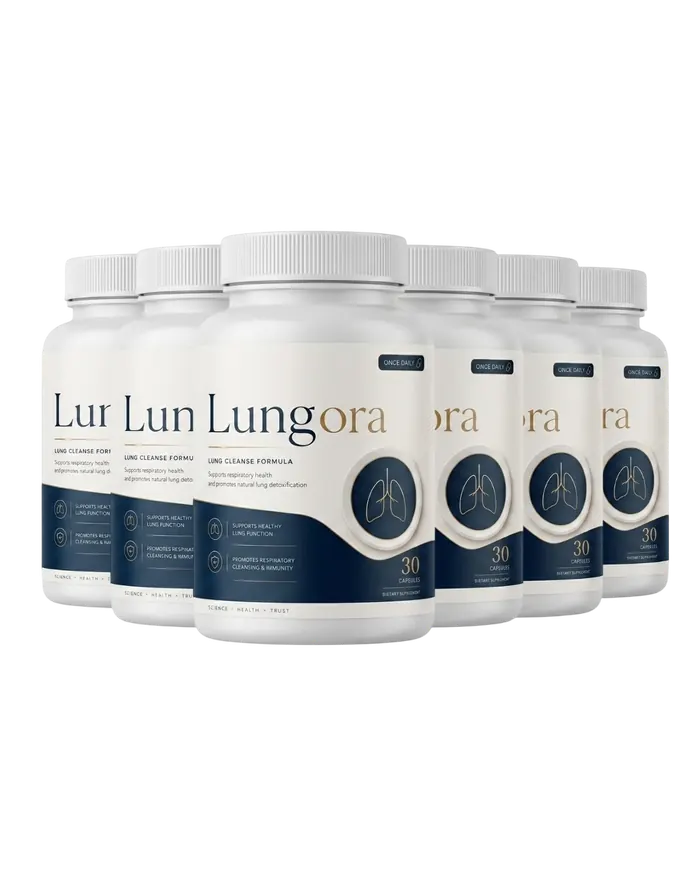
Curious about Lungora? The 6-bottle order gives the lowest price per bottle.
6 bottles at $49 each, $294 total. 60 days to request your money back · Ships free on 3 or 6 · Paid via BuyGoods.
How much L-carnitine fits in a 575 mg blend?
Less than the usual starting dose. Supplement doses normally run from 0.5 to 2 g a day, and the entire Lungora blend, all six ingredients together, weighs 575 mg.
Here is the sum, using only the label. Take 500 mg of L-carnitine out of 575 mg and 75 mg is left. But the blend also holds the magnesium glycinate that supplies the label's 80 mg of magnesium, and that compound weighs more than 80 mg on its own. So the L-carnitine has to sit below 500 mg, however the rest is split.
| Use studied | Daily L-carnitine | Could the whole blend hold it? |
|---|---|---|
| Usual supplement range | 0.5 to 2 g | No, not even the low end |
| Heart failure trials | 1 to 6 g | No |
| Blood sugar studies, 2 to 52 weeks | 0.25 to 4 g | Only the lowest doses |
| Polycystic ovary syndrome | 3 g | No |
| Osteoarthritis trial | 250 mg three times a day (750 mg) | No, it is larger than the blend |
| Lungora capsule | Not published | Below 500 mg by the arithmetic above |
Why does the number matter so much? Carnitine products on store shelves hold anywhere from about 3 mg to 5,000 mg, the NIH says. A label that only names the ingredient could mean a trace or a full dose, and with a proprietary blend you cannot tell which.
If you already take a separate carnitine product, add the two together and show both labels to your pharmacist. That is the only way the roughly 3 g level linked to stomach upset and body odor could come into play.
How the 575 mg is shared out is explained on our proprietary blend page, and the full panel is on the supplement facts page.
What did L-carnitine studies actually find?
Mostly mixed results. The NIH lists heart disease, dementia, poor leg circulation, blood sugar markers, infertility, osteoarthritis, exercise and weight, and finds the evidence mixed for every one.
Memorial Sloan Kettering adds detail. A meta-analysis found some weight and body mass index benefit, but carnitine did not change blood pressure or the rate of death or heart failure after a heart attack, and guidelines do not recommend it for cancer fatigue (Memorial Sloan Kettering, Carnitine (About Herbs)).
The TMAO question
Carnitine that is not absorbed reaches gut bacteria, which turn it into TMAO. The NIH describes TMAO as linked to higher heart disease risk while saying the meaning for supplement users is not well understood. It is one more reason to treat "heart support" claims for carnitine with care.
L-carnitine side effects and medicine interactions
At ordinary doses it seems well tolerated. The usual complaints are stomach ones, and the best-known oddity, a fishy body smell, appears at about 3 g a day, several times what one capsule could hold.
Memorial Sloan Kettering also lists heartburn, headache, high blood pressure and body odor. Answer the five questions below to see which of the medicine cautions apply to you.
L-carnitine medicine check
Do you take warfarin, clopidogrel, apixaban or rivaroxaban?
Do you take thyroid medicine or have a thyroid condition?
Do you take valproic acid or another seizure medicine?
Have you been prescribed a pivalate antibiotic?
Are you pregnant, nursing a baby or younger than 18?
Answer every question to see your result. Nothing is saved or sent.
None of the L-carnitine cautions in our sources applies to you. Other ingredients carry their own, so read the full side effects list before you order.
Talk to your prescriber or pharmacist first and take the bottle with you. Carnitine may raise bleeding risk with blood thinners, may blunt thyroid hormone in the tissues, and its levels drop with some seizure medicines and antibiotics.
The Lungora label says not to use it under 18, while pregnant or while nursing. The Linus Pauling Institute also notes that long-term safety data in pregnancy and breastfeeding are lacking.
The bleeding and thyroid notes come only from Memorial Sloan Kettering; the NIH and Linus Pauling pages do not mention warfarin or thyroid hormone. The seizure medicine and antibiotic notes come from the NIH and Linus Pauling, and they describe carnitine levels falling, not a danger from the supplement.
Should L-carnitine sway your decision on Lungora?
Probably not. Your body makes its own, supplements absorb poorly, results are mixed, and the amount in a capsule is below the usual starting dose.
If you are weighing the energy trio, the CoQ10 page covers the next member. Its partner on the sales page is butcher's broom, and the Lungora ingredients overview lists all six.
L-carnitine in a lung formula: common questions
Is L-carnitine good for lung health?
We found no evidence either way. The NIH fact sheet, the Linus Pauling Institute and Memorial Sloan Kettering cover heart, blood sugar, fertility, joints and exercise, and none of the three discusses the lungs or COPD.
How much L-carnitine is in Lungora?
The label does not give a number. Simple arithmetic still sets a ceiling: once the magnesium glycinate is counted, the other five ingredients share less than 495 mg, so the L-carnitine must be below the 500 mg low end of usual doses.
Does the body make its own L-carnitine?
Yes. The NIH Office of Dietary Supplements says the liver and kidneys make enough for healthy children and adults, so carnitine is not an essential nutrient and has no recommended intake.
Is L-carnitine good for the heart?
The results are mixed. Memorial Sloan Kettering found no effect on blood pressure or on death or heart failure after a heart attack, and the NIH notes that gut bacteria turn unabsorbed carnitine into TMAO, a compound tied to heart risk.
Can L-carnitine cause a fishy body odor?
Yes, at about 3 g a day, along with nausea, cramps and diarrhea. One Lungora capsule weighs far less than that in total, so the odor is unlikely unless you also take a separate carnitine product.
Can I take L-carnitine with warfarin?
Ask the clinician who manages your warfarin first. Memorial Sloan Kettering says carnitine may add to warfarin's effect and raise bleeding risk, and it lists clopidogrel, apixaban and rivaroxaban too.
Does L-carnitine affect thyroid medicine?
It might. In one trial cited by Memorial Sloan Kettering, carnitine blocked some effects of thyroid hormone in body tissues and eased an overactive thyroid. Anyone treated for a thyroid condition should check before starting it.
Why do seizure medicines and some antibiotics matter here?
They work in the opposite direction. Valproic acid and other anticonvulsants, and pivalate antibiotics, lower the body's own carnitine, so the doctor prescribing them should know about any carnitine product.
Page check
Written by
Reads every line of the bottle label and checks each health statement against NIH, CDC, FDA and American Lung Association pages.
- Label check date: October 13, 2026
- Built from the printed bottle label, the brand order and policy pages, and the health sources cited in the text
- See something wrong? Tell us at [email protected], and read how this site checks claims