Does Lungora Really Work? 0 Studies of the Capsule, 6 Ingredients Checked
Quick answer
Does Lungora really work? No published study has tested the Lungora capsule, so nobody can show that it works for the lungs. Its label lists 80 mg of magnesium and a 575 mg blend of six ingredients, and those ingredients were studied for other uses, such as nerves, veins, the heart and joints, not breathing. Healthy lungs already clean themselves. See a doctor for any lasting cough or breathlessness.
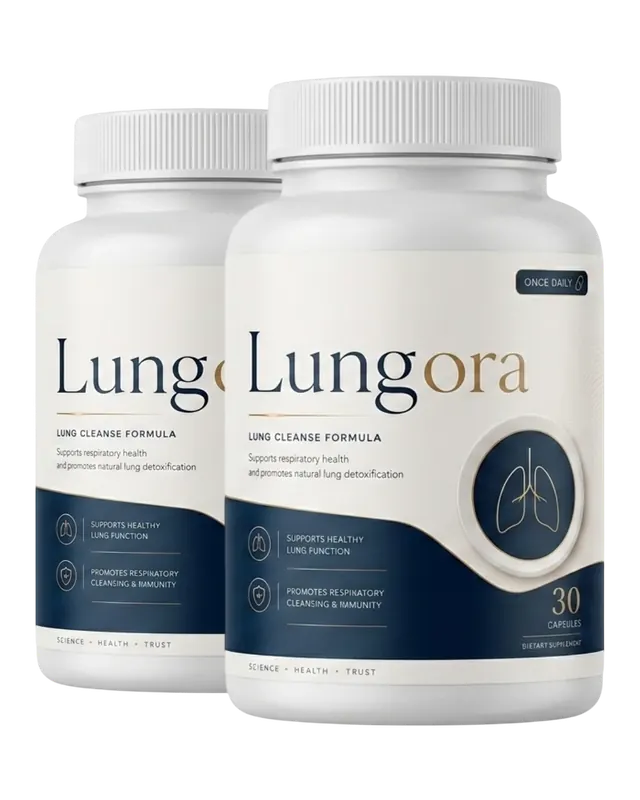
Does Lungora really work? It is the most common question about this capsule, and it has a short answer and a long one. The short answer is that nobody can say, because nobody has tested it. The long answer is below.
We go through the claims on the bottle, what each of the six ingredients was studied for, and whether one capsule holds enough of anything to matter. We also explain what the brand's own sales page says about how the capsule is meant to act. It is not what the bottle says.
Key facts
- No published study of Lungora exists, and the brand cites none.
- The label lists magnesium at 80 mg (19% of the Daily Value) and a 575 mg proprietary blend of six names, with no single amounts for the other five.
- Not one of the six ingredients has a human lung study in our sources. The lung findings that exist come from animals.
- The sales page groups the ingredients as nerve, circulation and antioxidant support. It never ties them to the lungs.
- One capsule a day, 30 capsules a bottle, for adults aged 18 or older.
- Lungora is not FDA approved and is not a treatment for COPD, asthma or any other disease.
What is Lungora, and what does the label promise?
Lungora is a once-daily capsule dietary supplement for adults. The bottle holds 30 capsules and the front reads LUNG CLEANSE FORMULA. People also search for Lungora pills, drops or gummies. It is one product: a vegetable capsule, with no drop or gummy version on the label.
| Claim on the front | What we found |
|---|---|
| Supports respiratory health and promotes natural lung detoxification* | No study of any pill that cleanses lungs in our sources |
| Supports healthy lung function* | A body-function claim. The maker, not the FDA, must back it |
| Promotes respiratory cleansing & immunity* | None of the five blend ingredients appears in the NIH immune function fact sheet |
The star on each line points to the small FDA box: these statements have not been evaluated by the Food and Drug Administration, and the product is not intended to diagnose, treat, cure or prevent any disease.
Why do healthy lungs need no capsule to clean them?
They have their own cleaning system. The airways are lined with tiny hairs called cilia and coated with mucus. The mucus catches dust and germs, and the cilia push it toward the throat, where you cough it up or swallow it (American Lung Association, How Lungs Work).
The American Lung Association calls the lungs self-cleaning organs, and says most detox products lack the scientific data to recommend them (American Lung Association, Can You Detox Your Lungs?). A pulmonologist quoted by WebMD says no research supports any lung detox product (WebMD, Lung Detox: Can You Cleanse Your Lungs?). A capsule would have to improve on a system that already runs by itself.
What was each Lungora ingredient studied for?
Not one of the six was studied as a lung cleanser. Here is what each was studied for, at what daily amount, and what the label tells you.
| Ingredient | What it was studied for | Study amount | On the Lungora label |
|---|---|---|---|
| Magnesium glycinate | Daily needs, limits and drug interactions in NIH fact sheets | 420 mg Daily Value; 350 mg a day limit from supplements | 80 mg |
| Alpha lipoic acid | Mainly diabetic nerve pain; lung data are rat studies | 600 mg a day by mouth | Not published |
| Butcher's broom root extract | Heavy legs and haemorrhoid itching, as a traditional EU remedy | 150 to 200 mg of dry extract per dose | Not published |
| L-carnitine | Heart disease, blood sugar, fertility and exercise, with mixed results | 0.5 to 2 g a day | Not published |
| Turmeric extract, 95% curcuminoids | Best early evidence is for knee osteoarthritis; lung data are animal only | About 80 mg to 4 g of curcumin a day | Not published |
| Coenzyme Q10 (as ubiquinone) | Heart failure, blood pressure, statin muscle pain and Parkinson's, with mixed or no benefit | 30 to 100 mg a day is typical | Not published |
A dose only means something when the studied dose and formula match the product. The FTC tells sellers that a study counts only if its dose and formula line up with what is sold (FTC, Health Products Compliance Guidance). With five amounts hidden, nobody outside the company can run that check.
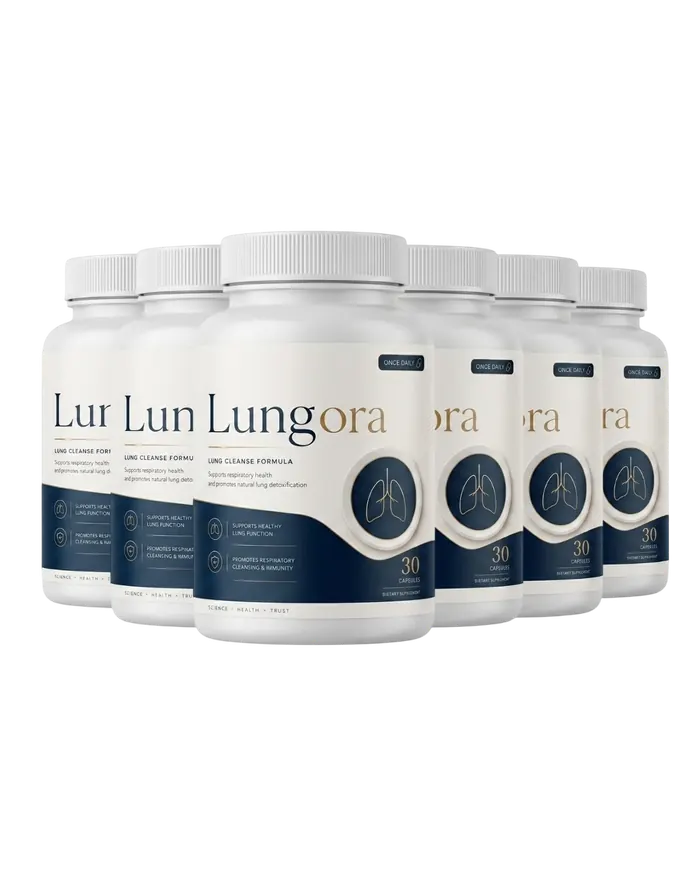
No study shows the capsule helps the lungs. If you still want to try it, the order page shows the 60-day window.
This site earns money when you buy through its order links; the price you pay does not change.
Does one Lungora capsule hold enough of anything?
Probably not enough to match the doses used in studies, even for the uses those studies covered. The label gives two numbers: 80 mg for magnesium and 575 mg for the whole blend.
The arithmetic is simple. The whole 575 mg blend weighs less than one 600 mg trial dose of alpha lipoic acid, and alpha lipoic acid is only one of six names in it. If L-carnitine took even 500 mg, the other five would share under 75 mg. The 80 mg of magnesium sits inside the 575 mg, not on top of it. Our label by the numbers post shows each line.
How does the brand itself say Lungora works?
Through nerves, circulation and antioxidants, not through the lungs. The sales page sorts the six ingredients into three groups, and no description of any group mentions breathing, detox or cleansing.
| Sales page heading | Ingredients | Lungs mentioned? |
|---|---|---|
| Nerve Health Support | Magnesium glycinate, alpha lipoic acid | No |
| Circulation & Cellular Support | Butcher's broom, L-carnitine | No |
| Antioxidant & Healthy Aging Support | Turmeric extract, coenzyme Q10 | No |
Only the bottle says cleanse, detox and immunity. That mismatch is the main reason we cannot call any lung effect real. The ingredients may be fine supplements for other reasons, but a lung claim needs lung evidence, and there is none for this capsule.
What can you realistically expect from Lungora?
Most likely no change you can feel in your breathing. One confirmed contribution is some magnesium: 80 mg a capsule.
| What you might hope for | Support | Why |
|---|---|---|
| Easier breathing on stairs | Not supported | No ingredient was tested for breathing in people |
| Less cough or phlegm | Not supported | Nothing in the formula was studied for mucus |
| Fewer colds or chest infections | Not supported | The immunity wording has no ingredient-level support |
| More energy | Unknown | L-carnitine and CoQ10 data are mixed and the amounts are hidden |
| Some magnesium in your day | Yes, modestly | 80 mg is 19% of the Daily Value |
If you do feel better, think about the other causes first. Four common ones are smoking less, a cold or bronchitis clearing on its own (WebMD, Lung Detox: Can You Cleanse Your Lungs?), a run of clean-air days (CDC, About Air Quality) and plain expectation. A new capsule tends to get the credit that belongs to something else.
Frequently asked questions
Does Lungora work?
No study of Lungora exists, and none of its ingredients has a human lung study in our sources, so any effect on your lungs is unproven.
Does Lungora really work for the lungs?
We cannot say it does. The sales page itself describes the ingredients as nerve, circulation and antioxidant support, and it never links them to the lungs.
How does Lungora work?
The brand does not explain a lung mechanism. Healthy lungs clean themselves with mucus and cilia, and no source shows a capsule adds to that.
Is Lungora a pill, a capsule, a drop or a gummy?
It is a vegetable capsule, 30 to a bottle, with one capsule a day on the label. Pills is another word for the same product.
Can Lungora help COPD or asthma?
No. It is a dietary supplement, not a treatment. Both conditions need a clinician, prescribed medicine and an action plan, so never swap a medicine for a supplement.
What is the best proof that Lungora works?
There is none to point to. A product study, a lab report and verified reviews are all not published.
Our view
So, does Lungora work? For the thing the bottle front promises, the honest answer is that nobody knows and no one has tried to find out. For the small things it does contain, such as 80 mg of magnesium, it does what 80 mg of magnesium does.
That is not a reason to be angry at a capsule. It is a reason to buy it for what it is. If you want to try it, use the 60-day window, keep a simple log of one repeatable breathing test, and ask for a refund if you notice nothing. Do not stop any medicine to try it.
Lungora is a dietary supplement. It is not FDA approved, because the FDA does not approve dietary supplements (FDA, FDA 101: Dietary Supplements). It does not treat COPD, asthma or any disease. If you take medicine or have a health condition, ask a doctor before you start.
Last updated . Medically reviewed by Dr. Madeeha Shahzadi, MD, Physician on .
Page check
Written by
Reads every line of the bottle label and checks each health statement against NIH, CDC, FDA and American Lung Association pages.
Medically reviewed by
Dr. Madeeha Shahzadi, MD, Physician
Medical reviewer. Review date: October 16, 2026.
- Last updated: October 29, 2026
- Built from the printed bottle label, the brand order and policy pages, and the health sources cited in the text
- See something wrong? Tell us at [email protected], and read how this site checks claims